
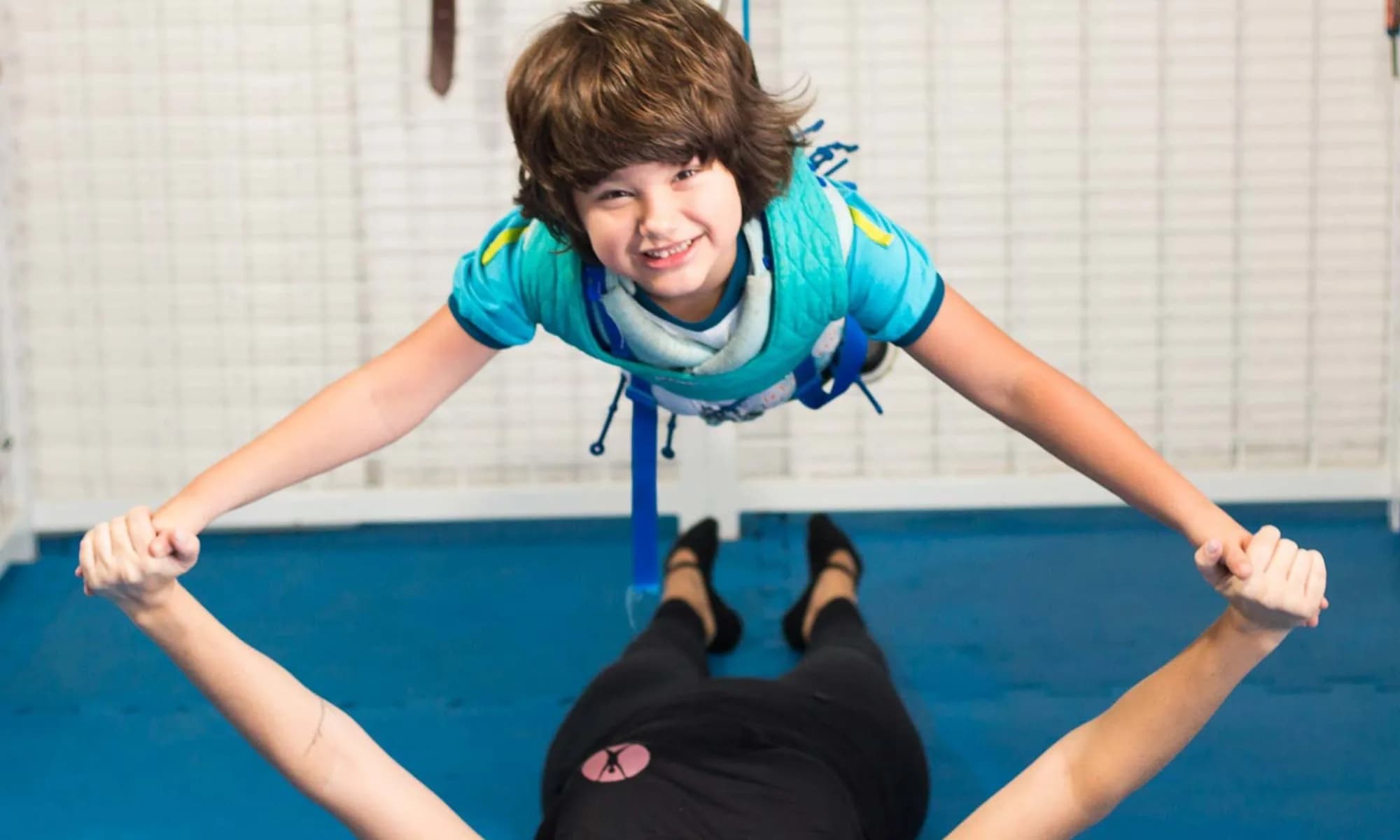
Effect of PediaSuit™ Protocol on Gross Motor Function of Children and Adolescents with Cerebral Palsy
Journal of Engineering Research · ISSN 2764-1317 · Vol. 6, n. 15, 2026 · Article 6
Regiane Luz Carvalho, Mônica Cristina Paulo Andrade, Raquel Arantes Del Nero Müller, Giovanna Pandolfelli Vivaldini, Andrea Kerckhoff dos Santos
A quasi-experimental, prospective, longitudinal study with a single-group pre-post design, in which each participant served as their own control. Sixty-three children and adolescents with cerebral palsy, classified from Level I to V of the Gross Motor Function Classification System (GMFCS) and aged 2 to 16 years, were recruited from several neurological rehabilitation centers in Brazil.
All participants were assessed with the Gross Motor Function Measure (GMFM-88) before and after an intensive intervention based on the PediaSuit™ Protocol: daily 4-hour sessions over 4 weeks, totaling 80 hours of therapy.
The authors conclude that the PediaSuit™ Protocol showed significant positive effects on gross motor function in all participants, regardless of cognitive variations, severity and region, with high acceptability (0% dropout) and only a few mild adverse effects reported in the first sessions (irritability, discomfort with the suit, sleep disturbances and fatigue).
| Level | Before | After | Gain |
|---|---|---|---|
| GMFCS I | 67.1 | 82 | +22.3% |
| GMFCS II | 65.8 | 75.6 | +14.9% |
| GMFCS III | 54 | 62 | +14.8% |
| GMFCS IV | 33.9 | 43.4 | +28.0% |
| GMFCS V | 14.6 | 20.6 | +41.1% |
All improvements p < 0.05.
63
children and adolescents with CP (GMFCS I–V, ages 2–16)
80 h
of therapy: 4-hour daily sessions over 4 weeks
p < 0.05
significant GMFM-88 improvement at every GMFCS level
0%
dropout rate
© The authors. Published in the Journal of Engineering Research (vol. 6, n. 15, 2026), DOI 10.22533/at.ed.13176152618106. Reproduced under the Creative Commons Attribution 4.0 International License (CC BY 4.0).